By Expert Hospice | Based on the Expert Hospice Podcast with host Rebecca
When families begin exploring hospice care, one of the most common questions we hear is, “What exactly does hospice provide—and how does it adjust as needs change?”
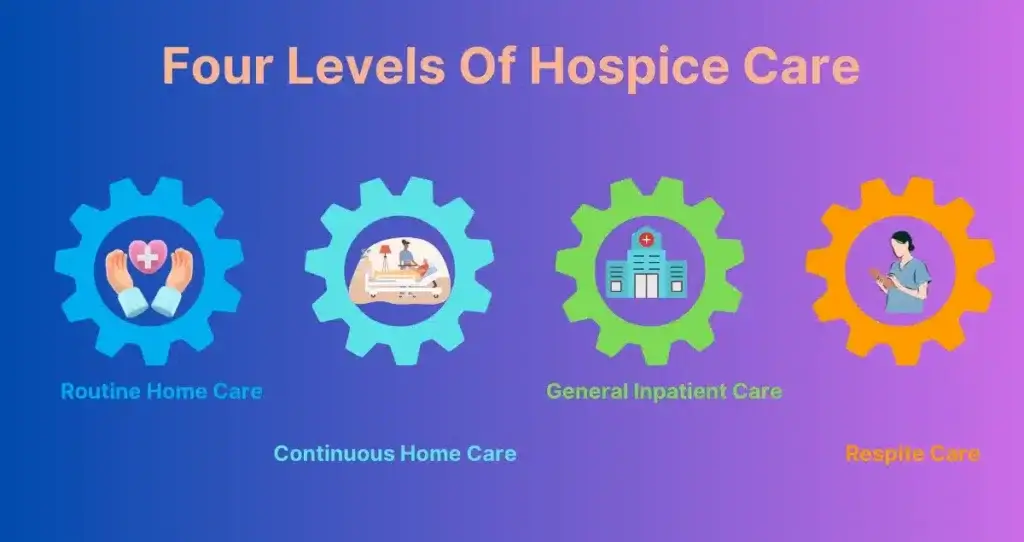
The answer lies in something called the four levels of hospice care, each designed to meet a patient’s evolving physical, emotional, and spiritual needs. In a recent episode of the Expert Hospice Podcast, host Rebecca dives deep into these levels, sharing what they are, how they work, and how they can bring peace of mind to patients and families alike.
🎧 Listen to the full episode here
1. Routine Home Care: The Foundation of Hospice
Most patients receiving hospice care begin with routine home care. This level provides ongoing medical, emotional, and spiritual support in the comfort of wherever the patient calls home—whether that’s a private residence, assisted living, or nursing facility.
Patients receive visits from a nurse, hospice aide, social worker, chaplain, and other team members based on their individualized plan of care. Medications and equipment are delivered, and the hospice team is available 24/7 to respond to any urgent needs.
Rebecca recalls a patient named Joe, a quiet man in his late 80s who loved sitting by the window to watch hummingbirds. With routine hospice support, Joe was able to stay home, remain pain-free, and share his final months with family, telling stories and laughing with his grandkids—on his terms, in his space.
2. Continuous Home Care: When Things Become More Urgent
Sometimes a patient’s symptoms worsen and require more intensive support, but the family still wants them to remain at home. This is where continuous home care steps in.
This level provides around-the-clock nursing care in the home, usually for 24 to 72 hours, during periods of crisis such as uncontrolled pain, severe agitation, or shortness of breath. Once the patient is stabilized, they can return to routine care.
Continuous care can be a lifeline for families who fear having to rush to the hospital. Instead of that chaos, they gain a steady presence, comfort, and guidance—right at home.
3. Inpatient Hospice Care: Expert Care in a Clinical Setting
If a patient’s symptoms become too complex to manage at home, inpatient hospice care offers a safe, supportive alternative. In this setting—such as a hospice house or designated hospital unit—patients receive 24-hour skilled nursing to manage pain, nausea, respiratory distress, or severe anxiety.
This level of care is short-term and focused on stabilization. Once symptoms are under control, the patient can return home or continue routine care.
Rebecca explains how one family felt immense relief when their mother transitioned to inpatient care during her final days. “It was the first time in weeks that they could stop worrying and just focus on being present with her. The staff handled everything—symptoms, spiritual care, emotional support—and they were able to say goodbye peacefully.”
4. Respite Care: Relief for Family Caregivers
Hospice understands that caring for a loved one 24/7 is exhausting—emotionally and physically. That’s why respite care is built into the hospice benefit.
Patients can stay at a hospice facility or nursing home for up to 5 days while caregivers take a much-needed break. Whether it’s to recharge, attend a family event, or simply get some rest, respite care ensures your loved one is safe and supported while you care for yourself.
Self-care for caregivers is not selfish—it’s essential.
Hospice Is a Journey You Don’t Have to Walk Alone
No matter which level of care your loved one is in, hospice is more than just medical treatment—it’s about connection, compassion, and comfort. The team at Expert Hospice supports not just the patient, but the entire family, with:
- Pain and symptom management
- Emotional and spiritual support
- Education and training for caregivers
- Bereavement care for up to 13 months after a loved one passes
Rebecca reminds us that choosing hospice is not about giving up—it’s about living well in whatever time remains.
🎧 Listen to this episode of the Expert Hospice Podcast
For more resources, visit ExpertHospice.com